

The Trust Premium
How streaming’s data obsession created consumer burnout.


Hub Intel: Deep Dive reports are released monthly, delivering exclusive insights and in-depth analysis on key industry topics—available exclusively to paid subscribers. Paid subscribers also get access to a full premium report for download. Not a paid subscriber yet? Now’s the perfect time to upgrade! For just $5/month or $60/year, you’ll receive expert-driven reports packed with exclusive data—plus full permission to cite, republish, and use the insights in your work.
The Trust Premium
It started with a cocktail napkin. In the early 1980s, an NBC executive named Brandon Tartikoff scribbled two words on that napkin: “MTV Cops.” No market research, no predictive data, just pure, unadulterated human instinct. That cocktail napkin launched the series Miami Vice and changed television forever.
But forty years later, the entertainment industry decided that human instinct was far too dangerous. Creating pilots was too costly an experiment and took too long. Marketing budgets were becoming too expensive. Technology was the bright, shiny object and seen as the most innovative way to contain creative decision-making costs in a supply-driven industry. So, the entertainment industry built a massive, invisible surveillance machine that collected data. Whether it’s a website, a second screen experience, or a streaming service, every click, every pause, and every midnight viewing has become data points to be tracked and optimized. The original goal seemed logical: eliminate uncertainty, de-risk the business, and commodify every second of audience attention.
They thought they were building the perfect algorithm. Instead, they accidentally triggered a psychological crisis.
The 12 Minute Trap
With the explosion of data, we have fallen into what the business calls an analytics trap. For two decades, media executives operated on a fundamental premise: more choices + hyper-personalized recommendations = more value.
But value for whom? Dashboards inside major streaming platforms frequently light up with what looks like “high platform engagement.” They log a user scrolling for twelve minutes. To a machine, this registers as a victory. But what is the human reality? Choice paralysis. The scrolling user isn’t engaged … they are trapped in an endless loop trying to find something to watch, ultimately giving up in frustration.
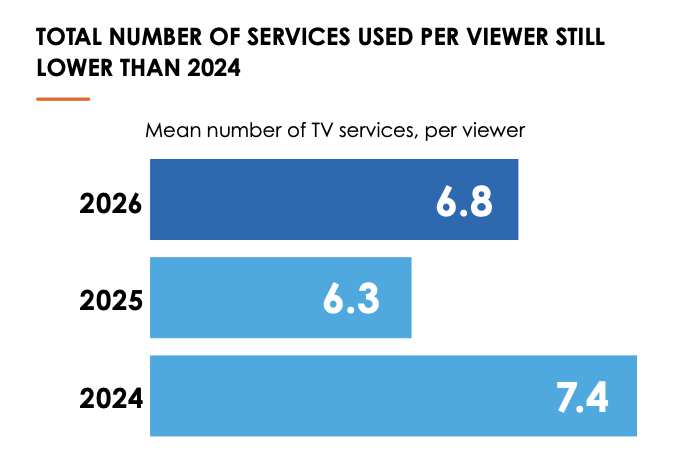
Consumers are hitting a breaking point. According to Hub’s Best Bundle study, American households have reached a ceiling, settling at an average of just 6.8 television services in 2026, down from a peak of 7.4 in 2024.
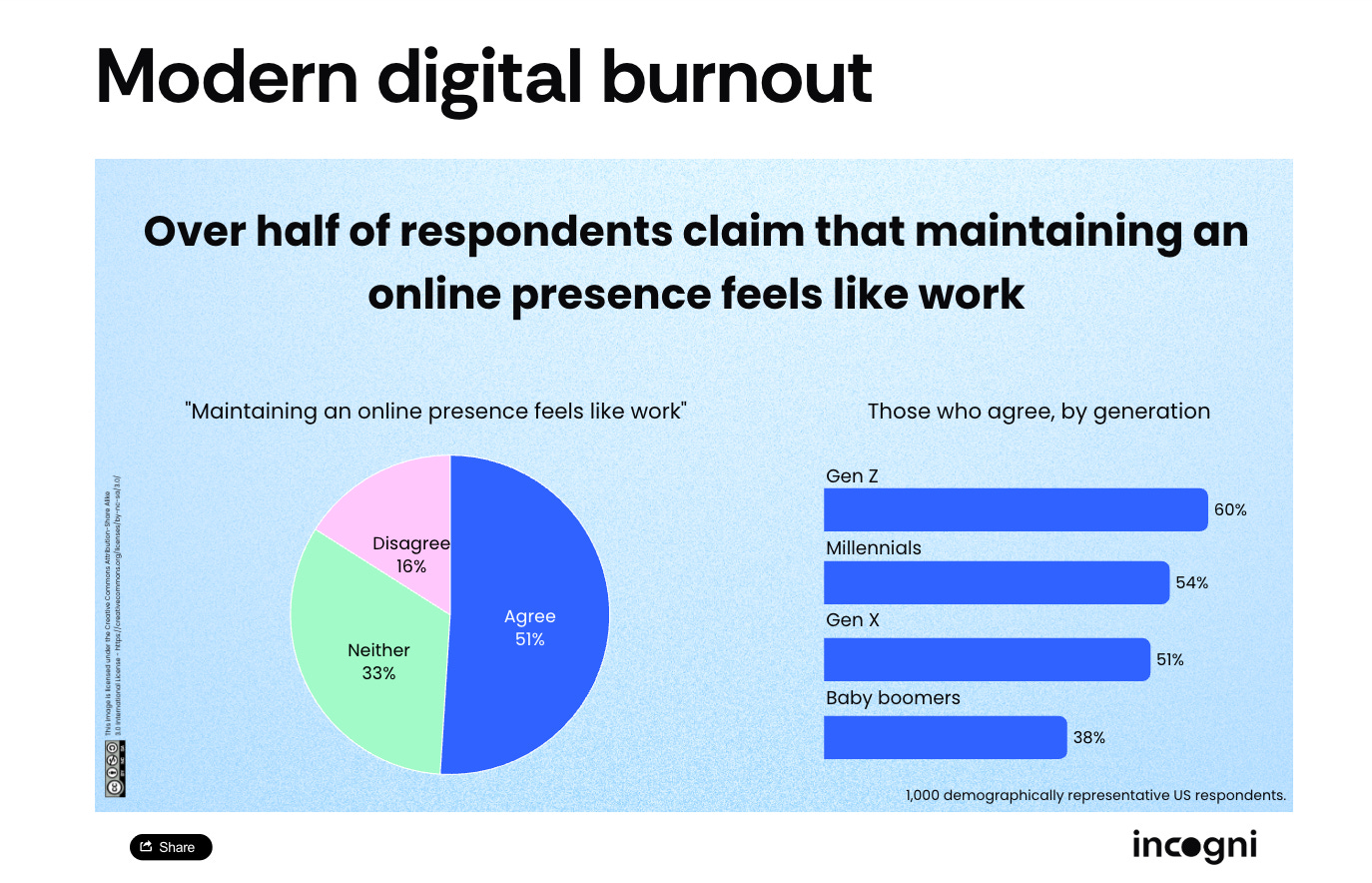
This isn’t just subscription fatigue. It is a symptom of a broader, systemic digital burnout. A study by Incogni reveals that 51% of Americans, and 60% of Gen Zers, report that merely maintaining their online presence feels like work. Navigating fragmented interfaces, memorizing sports rights, and dodging notifications has created a cumulative cognitive tax. The internet solved information scarcity, but it created a crisis of information management.
Cognitive Comfort and the Phantom Bundle
The battle lines are shifting. Platforms can no longer survive by competing for your “share of attention.” Attention is a renewable resource; cognitive energy is not. To win the next decade, the industry must transition to a completely new metric: share of cognitive comfort.
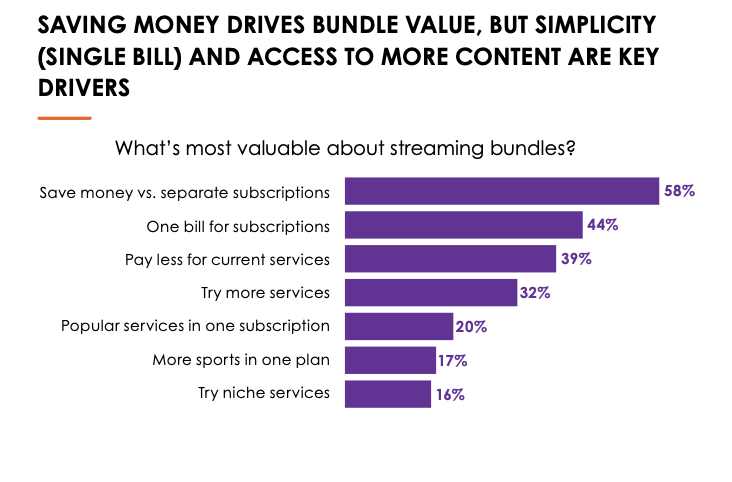
When viewers look at streaming bundles, they aren’t just looking for cheap content … they are hunting for products that lighten their cognitive load. Hub’s Best Bundle study shows that “ease of navigation” and “simplicity” are primary drivers, right alongside “cost savings.” In fact, having a single bill, rather than managing independent subscriptions, ranks second (44%) after direct savings (58%), beating simply paying less for existing individual services (39%).
When consumers pay for upgrades, like YouTube Premium, they aren’t just blocking ads; they are buying psychological peace of mind. Better curation is winning over the size of a particular streamer’s catalog. Familiarity with the user interface is now an amygdala bypass. The cognitive cost of switching requires so much labor, research, and tolerance of uncertainty, that consumers are willing to pay for the luxury of emotional continuity. Premium services decouple transaction pain, cure option fatigue, and prevent attention hijacking. What consumers want most when scrolling is focus, boundaries, and ease.
And this brings us to a baffling finding.
