

4 Modern Moviegoing Audiences
Why traditional demos fall short — and the four audience types that better explain modern box office behavior.


Welcome to Hub Intel. We’re here to provide data, not drama. Our goal is to help you understand the trends in the entertainment industry and what they mean to your business.
4 Modern Moviegoing Audiences
We all know and love the ice cream brand Ben & Jerry’s (and if you don’t, consider us mortal enemies). But how did the company become a market leader? Ice cream, in all its toothsome glory, has been a sought-after sweet treat for thousands of years. Yet Ben & Jerry’s knew that a successful foundation could be further developed for even better results. Enter the innovative, mix-in heavy flavors such as Chocolate Chip Cookie Dough, Half Baked, and Chunky Monkey — and the rest is history. The game had been changed.

Hollywood finds itself at a similar crossroads. For nearly a century, the film industry has relied upon traditional demographic quadrants — men/women, over/under 35 — to direct development, marketing, tracking, and projections. And these demos are still useful! But in a world of post-pandemic media fragmentation, genre-specific theatrical behavior, and widening conversion gaps between visibility, interest, and purchasing intent, innovation is needed once more.
So let’s take a page out of Ben & Jerry’s playbook and rewrite the script. I propose four new behavior-driven classifications (mix-ins, if you will) that build on the industry’s traditional demos. Consider it the microscope to the industry’s current telescope (I’m drunk on analogies today).
1. Heat Seekers
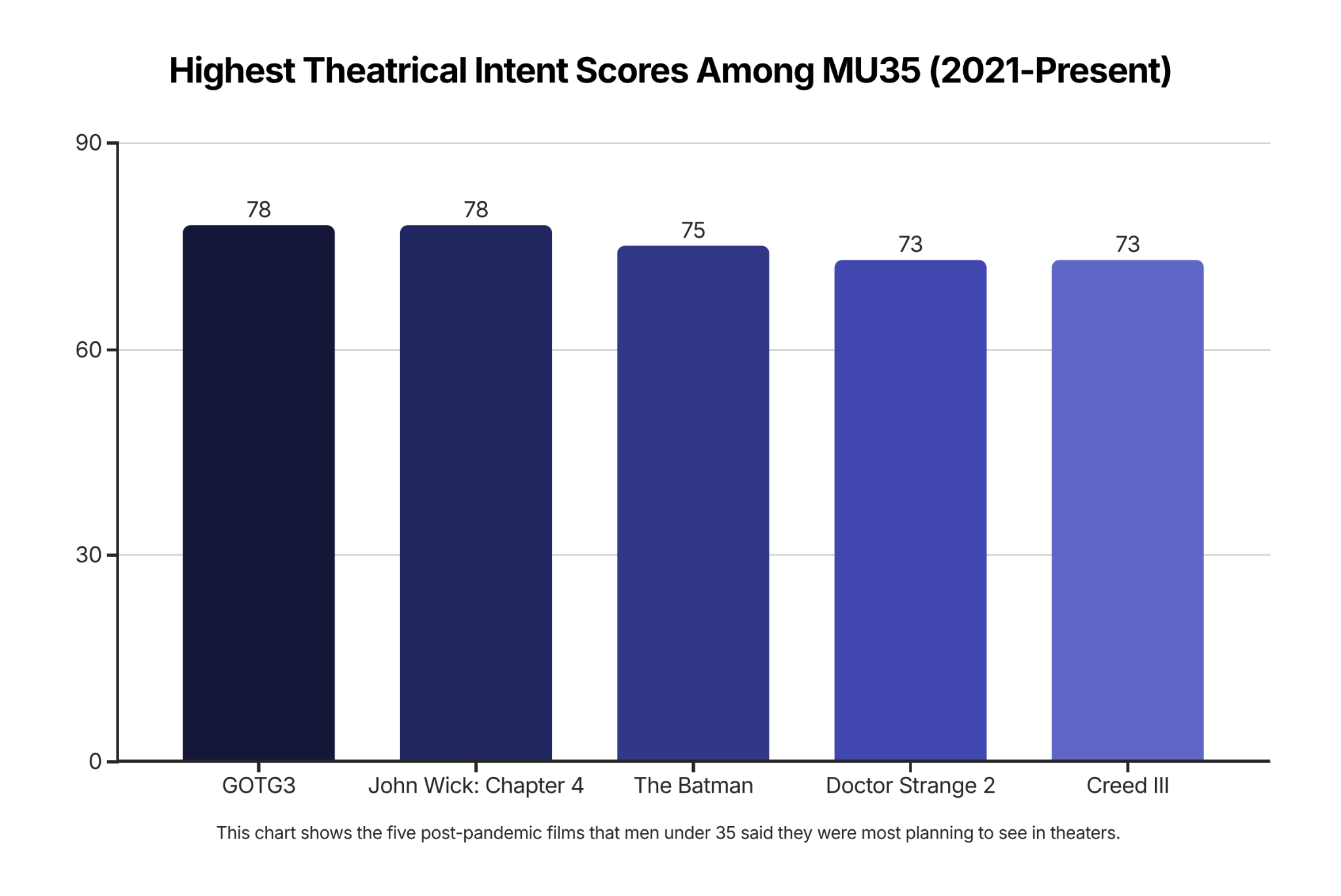
Modern box office equations are largely ruled by opening weekend outcomes, which are overwhelmingly driven by the most consistent moviegoers: men under 35. This group is most likely to show high early interest and intent for an upcoming title. Unsurprisingly, they strongly over-index on action, franchises, and star-driven vehicles. According to Greenlight Analytics, the five movies with the highest theatrical intent in the week of release among MU35 for 2021–2025 are Guardians of the Galaxy Vol. 3, John Wick: Chapter 4, The Batman, Doctor Strange in the Multiverse of Madness, and Creed III.
But they are not the only first adopters. Younger consumers are the most consistent moviegoers. That means under 35s in general, and Gen Z in particular. Women under 35 were the key drivers of the Wicked franchise’s success, for example.
Heat Seekers, as I am calling them, can be considered the most enthusiastic and locked-in audiences for major tentpole films as they want to be among the first to see their most-anticipated movies. As such, they shouldn’t necessarily be factored in when considering long-term legs because they are most likely to be opening weekend attendees. (Unless, of course, the movie is so good that it elicits repeat viewing like when I saw Dune: Part II three times in the first two weeks).
This group’s consistency helps explain why studios overemphasize early audience demand signals. They comprise the upfront demand and establish box office floors as the core early audience.
2. Browsers
Let’s be real: women 35+, culturally diverse consumers, and heartland audiences are criminally, woefully, embarrassingly under-served by Hollywood. (One of the most common questions I am asked in my day job is how to recruit these exact audiences). As a result, they can be more selective, streaming-first viewers unless specifically programmed for. This is why Browsers, as I’ve dubbed them, are one of the most misunderstood audiences in the theatrical ecosystem.
Browsers can be activated by familiar IP, genre comfort, and star recognition. But the real catalyst here is alignment. When source material, genre, and casting all work in unison, this highly valuable audience, inexplicably overlooked by the industry, shows up. The right IP, concept, and star can convince these infrequent moviegoers to buy a ticket, which can make the difference between a flop and franchise.
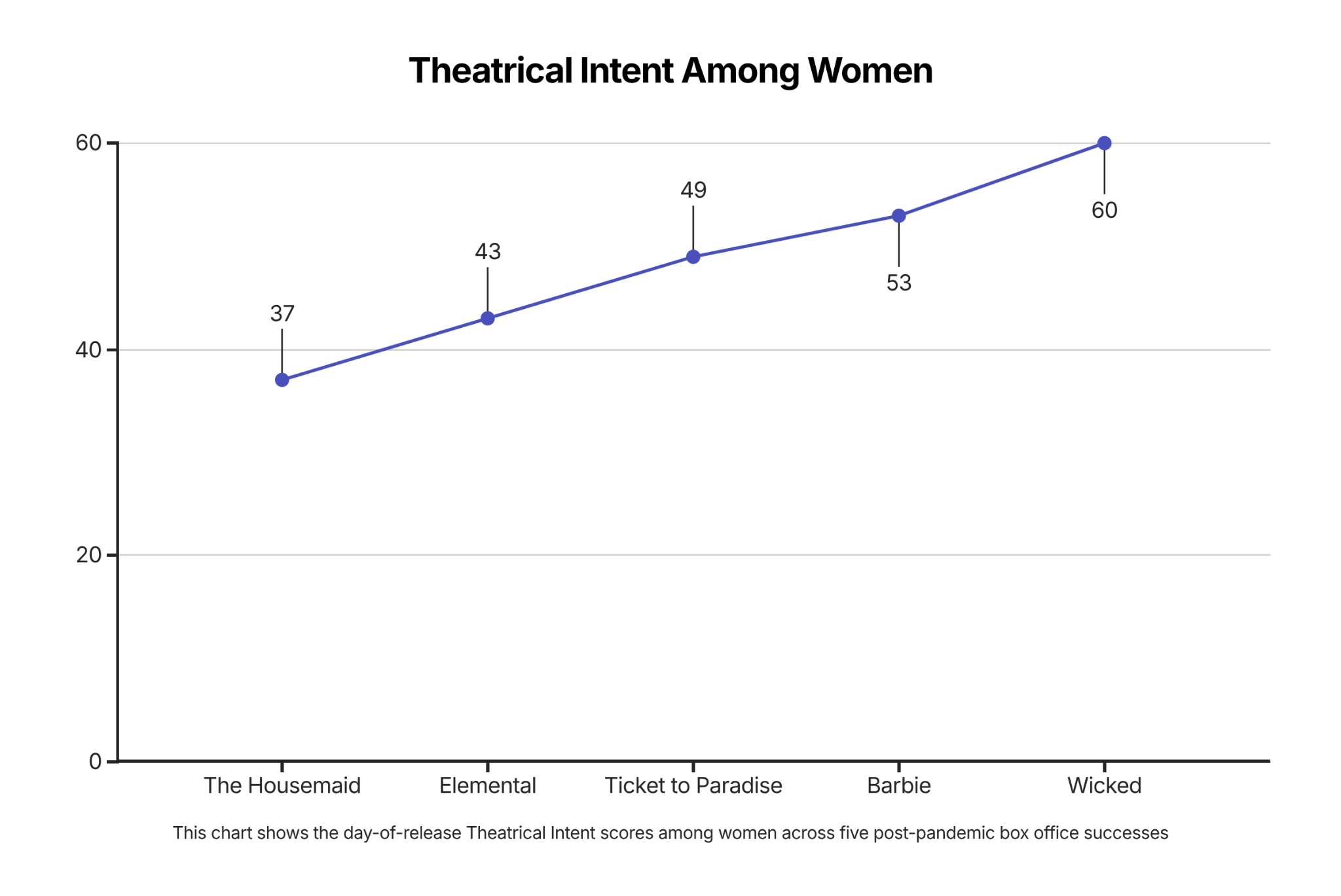
Recent successful examples with Browsers include The Housemaid, Elemental, Ticket to Paradise, Barbie, and the Wicked movies. All of these films boasted higher female theatrical intent vs. their male counterparts. The Housemaid wound up setting the ceiling for recent romantic movies with more than $400 million at the worldwide box office, and now a sequel is on the way.
None of this is to say that Browsers don’t like what Heat Seekers enjoy and vice versa. Young women and Black/Hispanic audiences continue to make the difference between horror hits and home runs while men are usually more willing to pay fees (theatrical ticket, VOD transaction, streaming subscription) regardless of genre, per Greenlight.
More often than not, Browsers are major contributors to box office longevity vs. front-loaded openings. Targeting this group with post-release marketing can help lift your domestic multiplier (a film’s total domestic earnings divided by its opening weekend total). A great example of this is 2016’s Deadpool, which primarily pitched itself as a filthy R-rated comic book action comedy, but also cheekily sold itself to secondary audiences as a Valentine’s Day date movie.
3. Fandom Loyalists
Cultural cool is driven by younger, digitally active audiences. Whatever special alchemy qualifies something as “cool” with these whippersnappers may be incomprehensible to us folks over 30. But it is highly valuable to Hollywood.
Fandom Loyalists, as I’m calling them, don’t have to be strictly under 35, though that is the primary demographic. Instead, they are driven by intense fandom, which is more reflective of today’s subgenre-driven interest spectrum. Fandom Loyalists have a strong affinity to niche genres such as anime, culturally specific IP, such as video games, and a love of campy irony. Similar to Browsers, they can be inconsistent moviegoers that show up en masse when directly served.
Godzilla: Minus One, Demon Slayer, Chainsaw Man, KPop Demon Hunters sing-along, Stranger Things and The Pitt finales, and The Amazing Digital Circus — few are true-blue blockbusters — but they point toward a growing appetite for atypical theatrical products.
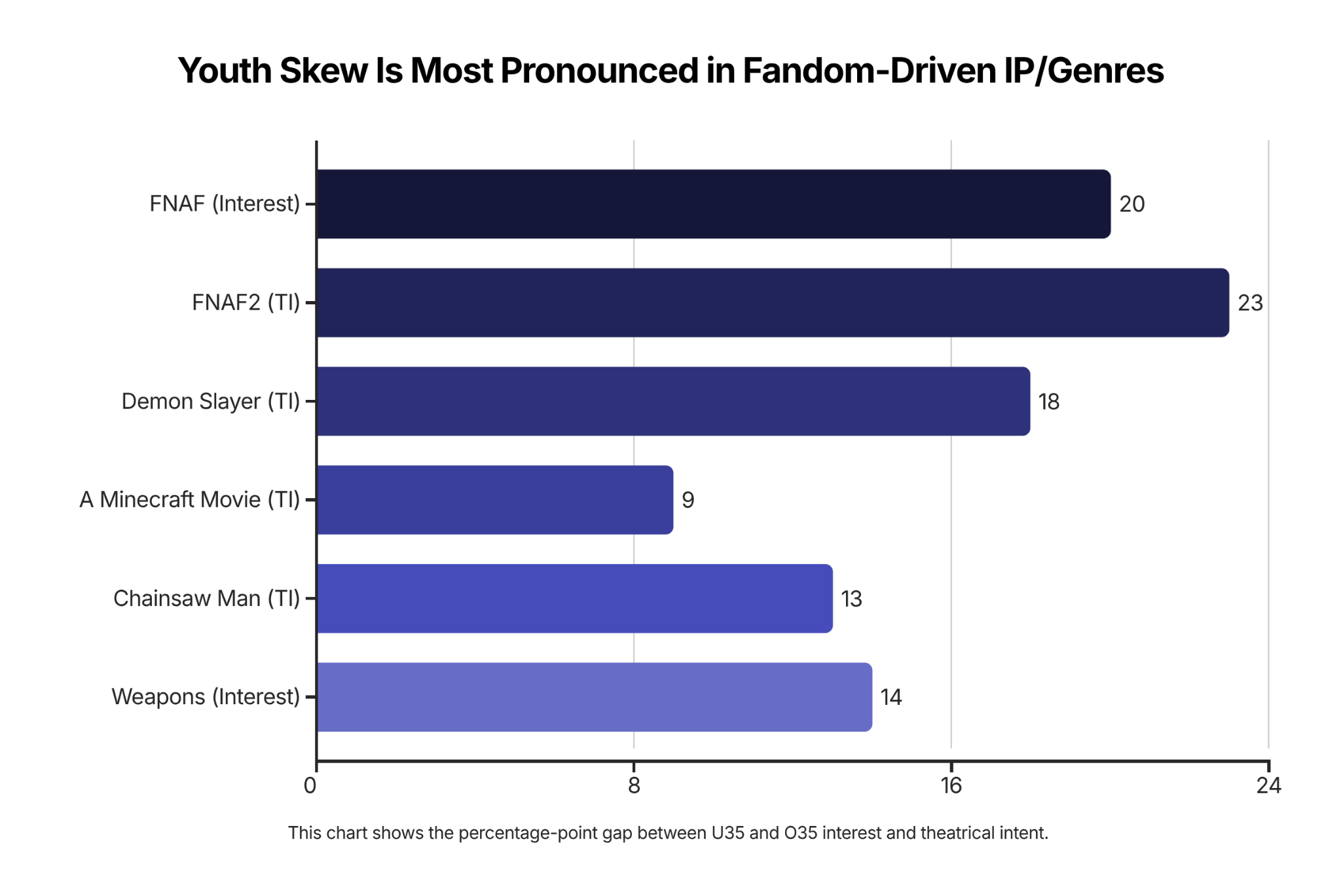
As online-forward audiences, Fandom Loyalists often boast high awareness and solid interest scores. Studios can help cultivate more buy-in from these “cool kids” by using TikTok as a content discovery funnel and YouTube as an engagement driver and connection-deepener for that content, especially given the notable overlap in users between the two.
4. Event Chasers
Post-pandemic, older demos (55+) mostly hit theaters only for prestige offerings, older IP, and culturally relevant concepts. While that creates a narrower band of theatrical viability, the 55+ set consistently shows a strong willingness to pay for a movie ticket when interested. That’s crucial, as it supports monetization across several windows and suggests higher economic impact when this audience is properly engaged. To get even more granular, Event Chasers have more disposable income to spend on premium large format (PLF) tickets (IMAX, Dolby, etc.), merchandise, experiences, etc. Similar to casual and infrequent moviegoers of all ages, Event Chasers typically only hit theaters for relevant titles that they deem to be must-see events.
Older IP, such as Superman and Beetlejuice (both boast some of the highest theatrical intent scores for the 55+ crowd in the last five years) are a huge draw for this group. For example, interest in legacy sequel Top Gun: Maverick among audiences 55+ was a whopping 17 points ahead of the under-35 crowd.
But it isn’t just the age of the property that matters. Oscar-hopeful One Battle After Another elicited healthier intent from this group than younger moviegoers thanks partially to its critical pedigree. Historical biopics such as Spencer and Napoleon also work well with this audience. In each instance, you can see how the biopic subject, franchise origins, or cinematic prestige appealed directly to older moviegoers with a familiar connection to certain historical time periods, subject matter, and properties (a.k.a, nostalgia).
Streaming Implications
These behavioral trends cross over from theatrical to streaming as well. Younger Millennials and Boomers are the strongest binge-watchers (40.3% and 41%), while Gen Z’s binge rate is the smallest (38.7%), according to Samba TV’s 2025 State of Streaming report. Why? Because Gen Z is often “consuming multiple shows at once,” splitting their attention across a wider array of titles, while older demos concentrate on a smaller number of top shows.
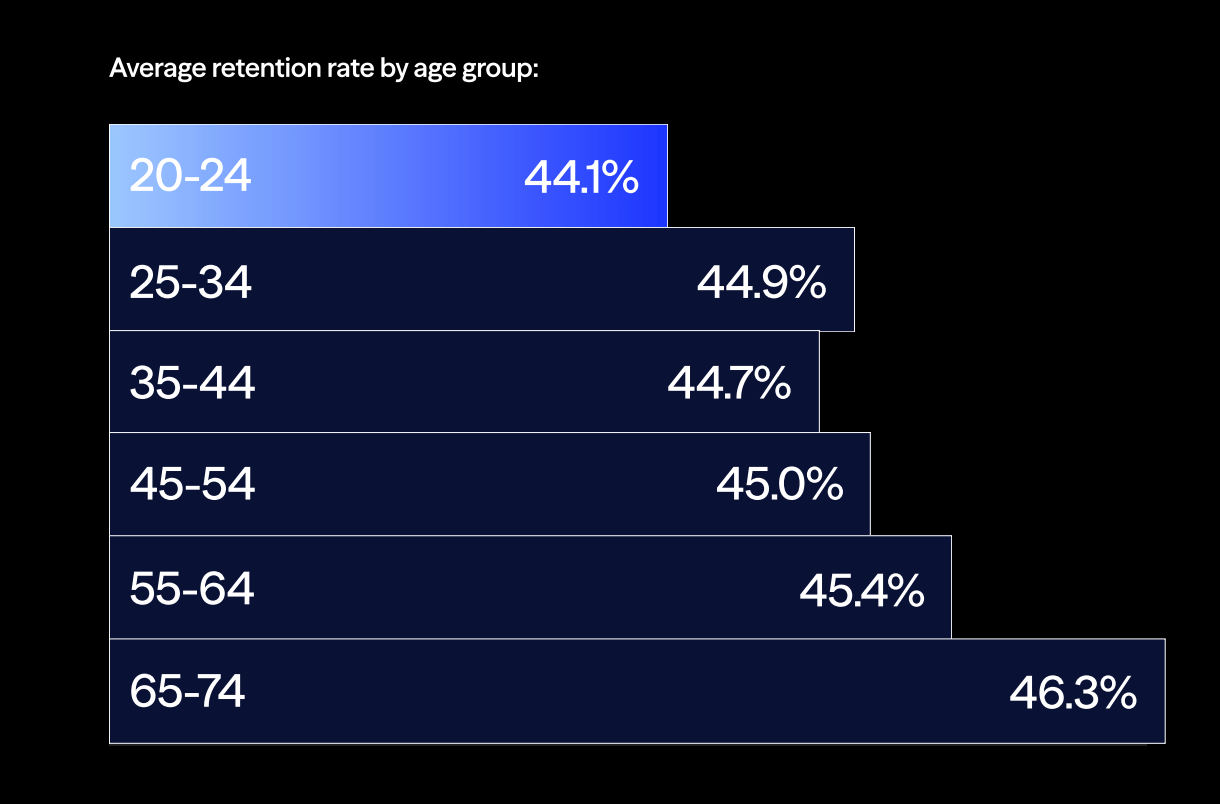
This mimics theatrical patterns. Older audiences are activated less often as they are more selective and don’t juggle as much content. But when they are activated, they show healthier monetization potential that trickles down to streaming commitment (shoutout to disposable income).
Gen Z, the backbone of Fandom Loyalists and a portion of Heat Seekers, has the worst retention rate (44.1%), according to Samba TV. Young, urban social-driven moviegoers are more active across Hulu, HBO Max, Twitter/X, and Netflix, per Greenlight. Event Chasers boast the best retention rate (46.3%). This reaffirms that early demand driven by online discourse does not always translate to sustained viewership and lower churn.Fandom Loyalists and Heat Seekers revolve more around immediate gratification. That helps upfront. Event Chasers and Browsers can be more selective but they’re also reliable consumers that are not as easy to capture, but beneficial to longer-term monetization.
Beyond Vanilla Demos
The traditional demographic quadrants still remain an important foundation, just like your classic ice cream flavors. But layering these new behavior-driven classifications better tap into the hows and whys of interest, intent, and conversion from specific audiences. In turn, Hollywood can more precisely develop programming, market upcoming titles, and project performance. We don’t need to throw out the old favorites. We just need to create new flavors.
Brandon Katz is the Director of Insights & Content Strategy at Greenlight Analytics where he focuses on evaluating the ever-fluid media landscape to unearth understanding, opportunity and value. Greenlight Analytics is the entertainment intelligence consulting company redefining how Hollywood finds, understands, and activates audiences. Prior to joining Greenlight Analytics, he served as the senior entertainment industry strategist at Parrot Analytics, and as a full-time entertainment industry reporter covering the Xs and Os of Hollywood, most notably with TheWrap and the Observer.
Going to These Upcoming Conferences? Come Say Hi 👋🏼
CTAM Consumer Insights Meeting: June 10, 2026 (New York, NY)
New CTAM Research: Viewer’s Choice – Signals for Strategy
Wednesday, June 10 — 10am - 1pm
Viewers have more choices across TV providers and streaming apps than ever before but remain unclear about what makes one subscription more valuable than another. The average viewer watches from six different sources, turning choosing ‘what to watch’ into a central friction point in the TV experience. New CTAM research, fielding in May in partnership with Hub Entertainment, uncovers how services can succeed in the next phase of streaming.
StreamTV Denver: June 16-19, 2026 (Denver, CO)
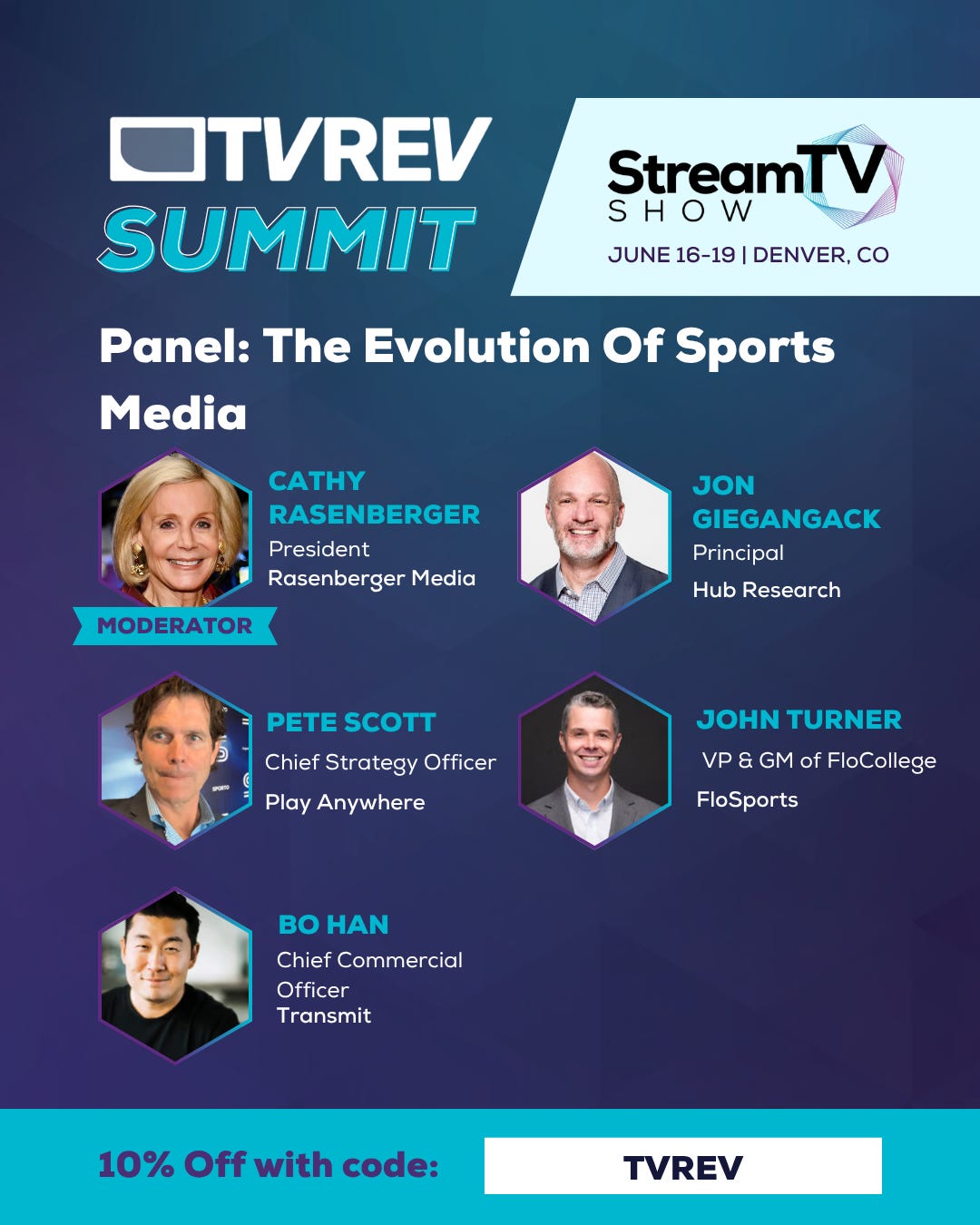
Panel: Evolution of Sports Media (TVREV Summit)
Tuesday, June 16 — 4:30pm - 5:05pm
As sports rights increasingly shift to ad-supported streaming platforms, sports is no longer the monolith it used to be. Audience behavior for sports is changing dramatically, particularly among younger fans. Today, almost half of Gen Z fans get their sports from social media, with the smart phone as their primary screen. They prefer highlights; only 30% watch full games. And they are often more engaged in the lifestyle of a sport, than the live event. This panel will explore successful strategies to reach distracted younger fans, deepen their fan engagement and more effectively monetize sports viewership in new innovative ways.
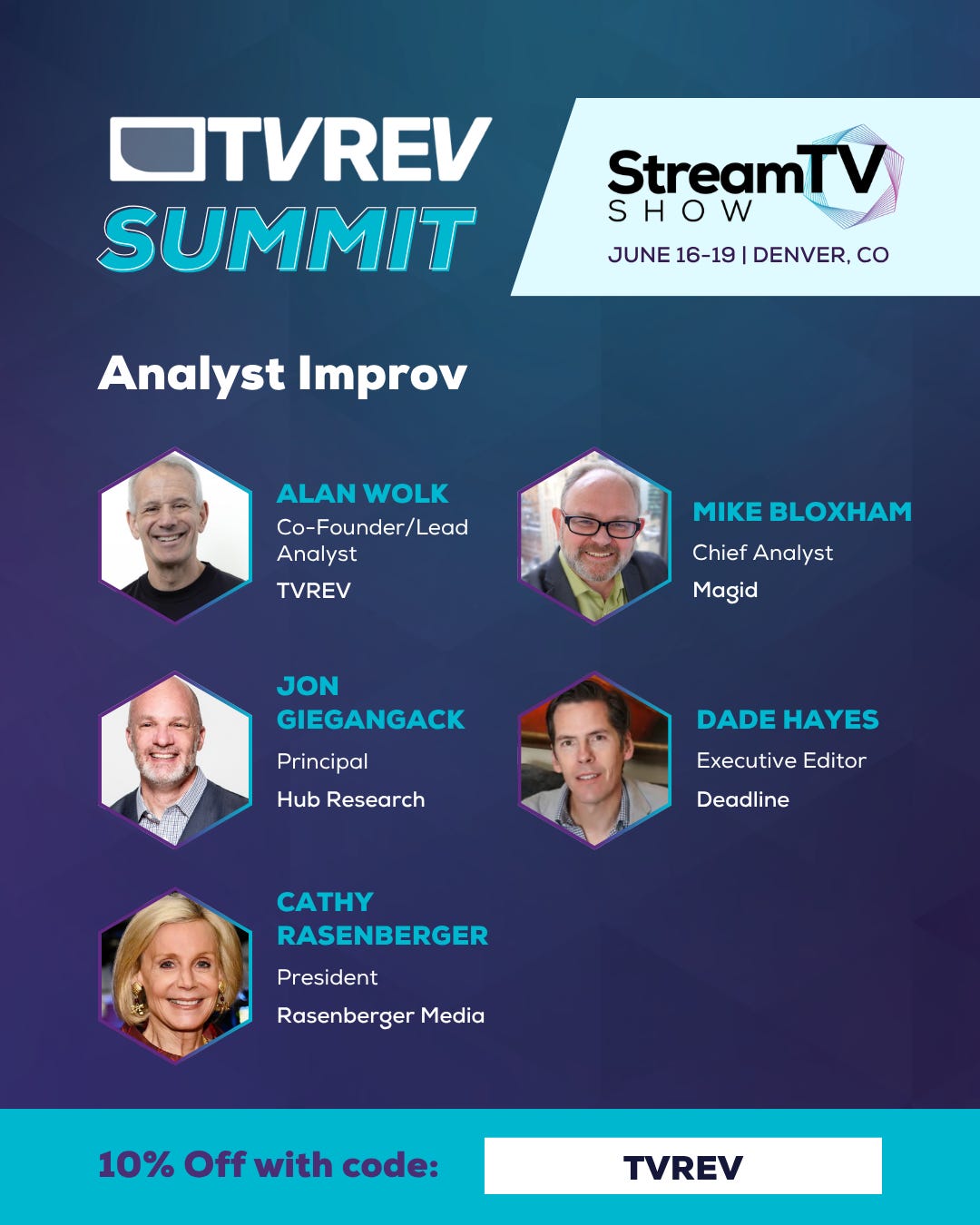
Analyst Improv with Alan Wolk, Dade Hayes, Mike Bloxham (TVREV Summit)
Tuesday, June 16 — 5:05pm - 5:30pm
The ultimate audience Q&A. Just like a real-life improv show, we’ll ask the audience for suggestions—a media related topic you want to hear more about— and then the analysts on stage will riff on what they’re thinking. There will be some “yes, and” and some “no, because” in what promises to be a no holds barred session with some ref hot takes.
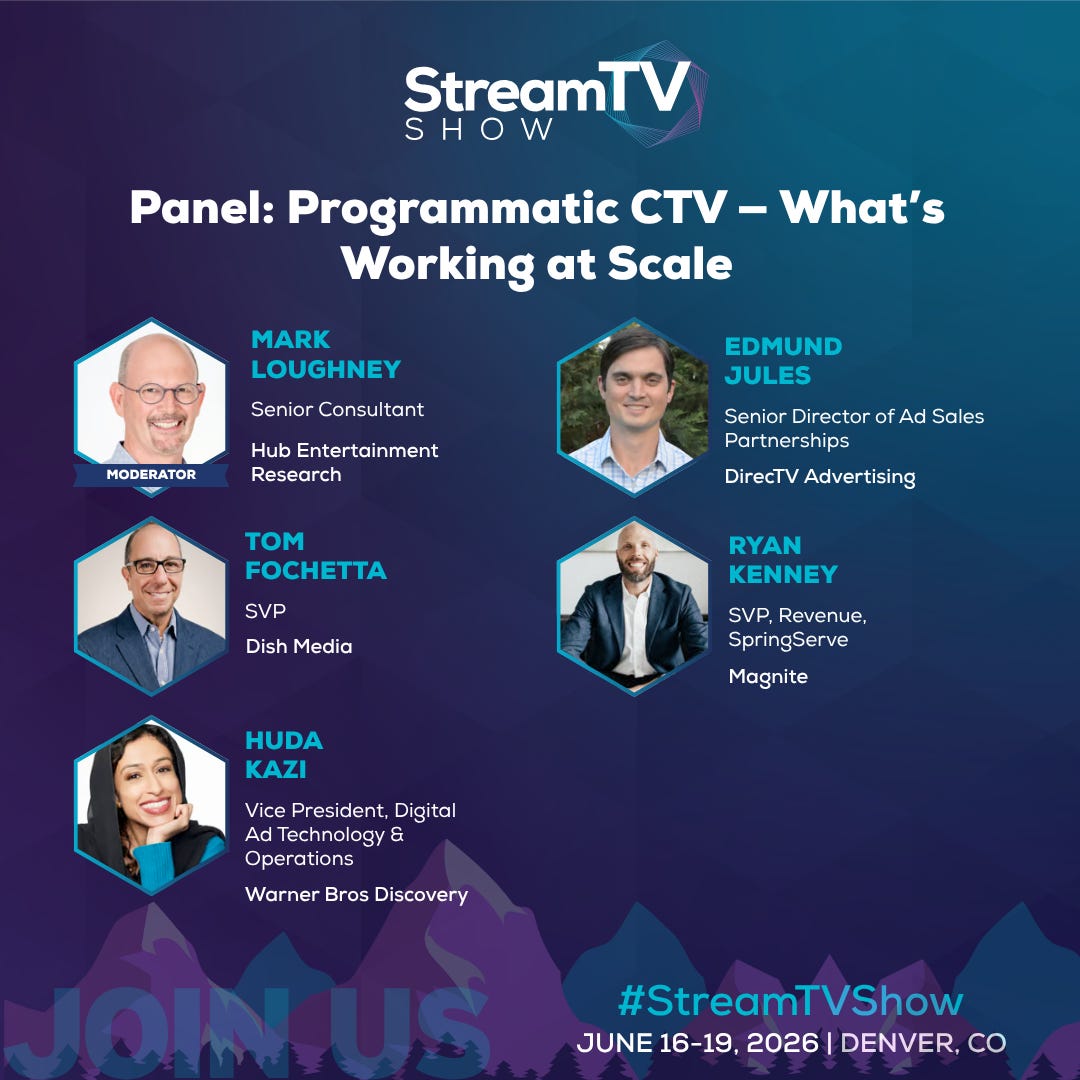
Panel: Programmatic CTV — What’s Working at Scale
Thursday, June 18 — 08:50am - 09:25am
Programmatic CTV has become a core driver of video investment—but success at scale now requires more than just buying impressions. This panel brings together leading marketers to discuss what’s truly driving performance today—from audience targeting and measurement to frequency management and creative innovation. Panelists will also discuss the growing role of complementary channels like programmatic OOH, and how advertisers are connecting big screen experiences.
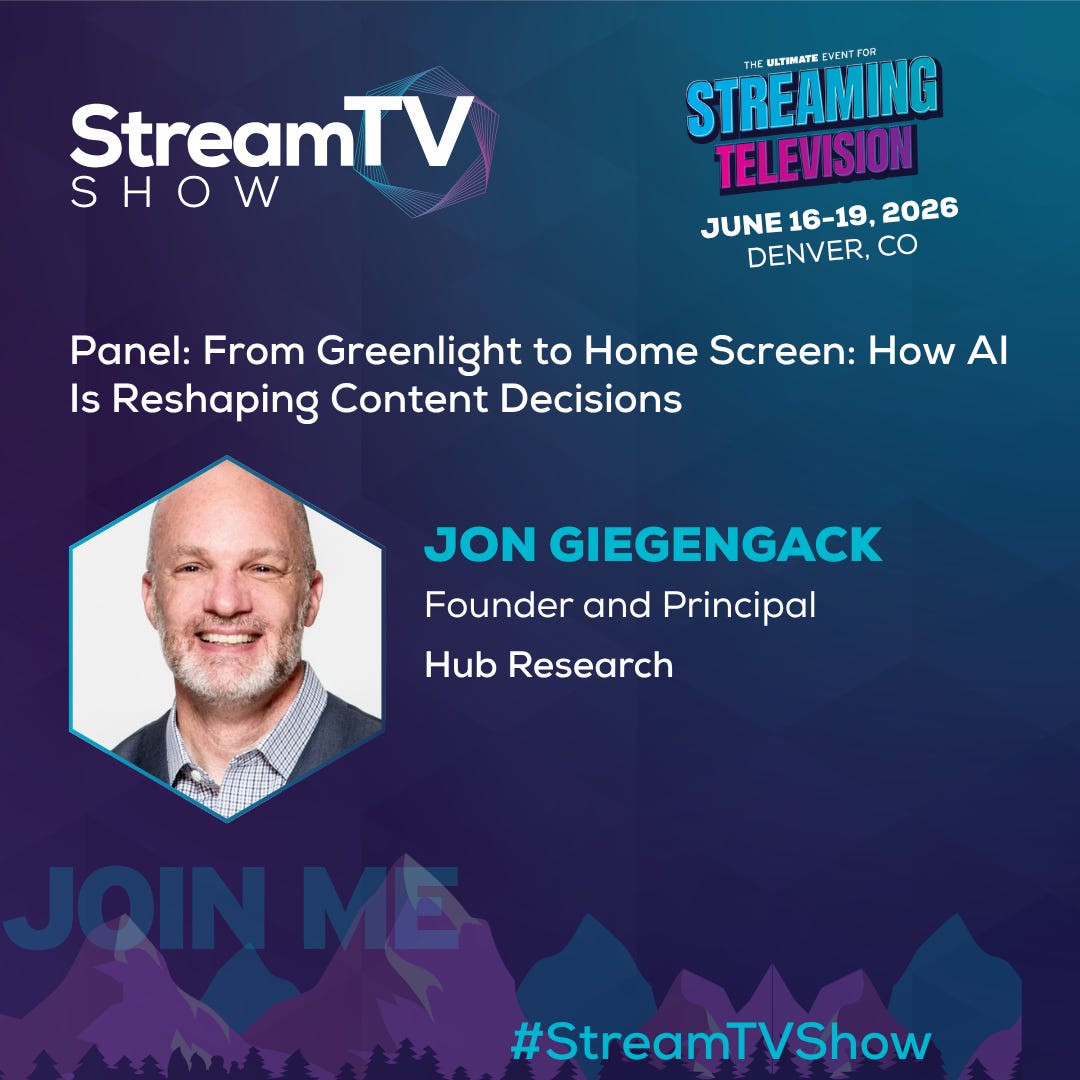
Panel: From Greenlight to Home Screen: How AI Is Reshaping Content Decisions
Thursday, June 18 — 11:00am - 11:20am
AI is now influencing nearly every stage of the content lifecycle — from development and greenlighting to curation, programming, and discovery on the home screen. As data and algorithms play a growing role in what gets made and what gets surfaced, leaders are rethinking how creative judgment, audience insight, and automation coexist. This session explores where AI is delivering real value, where it’s creating new risks, and how platforms are balancing efficiency with editorial control.
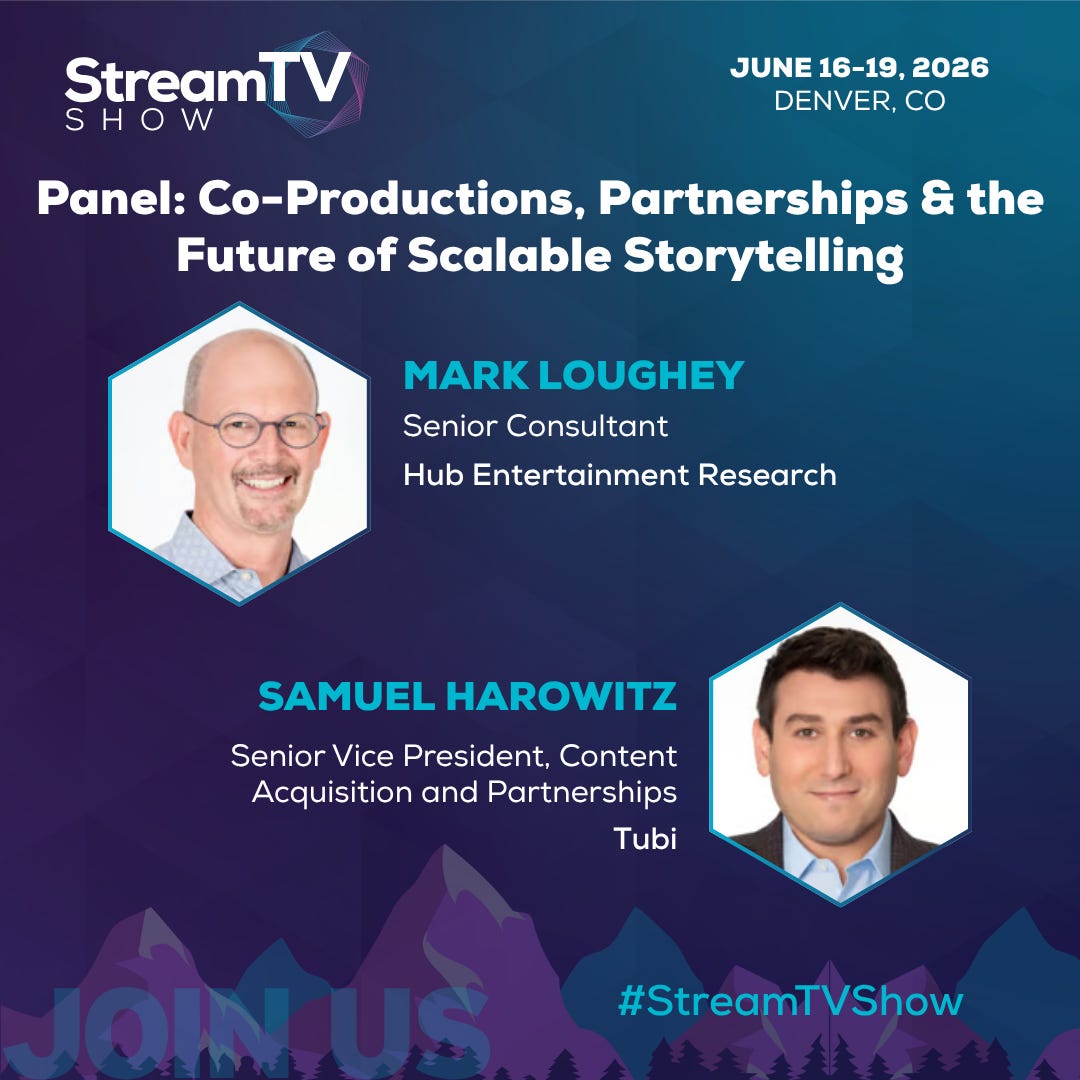
Panel: Co-Productions, Partnerships & the Future of Scalable Storytelling
Thursday, June 18 — 11:20am - 12:00pm
As streamers and studios look beyond a saturated domestic market, global growth is no longer optional — but how to execute it is far from settled. Should companies build international content capabilities in-house, or partner with local producers to move faster, reduce risk, and unlock new audiences? This session explores how players are using co-productions and strategic partnerships to scale storytelling globally, while protecting IP, brand identity, and monetization potential.
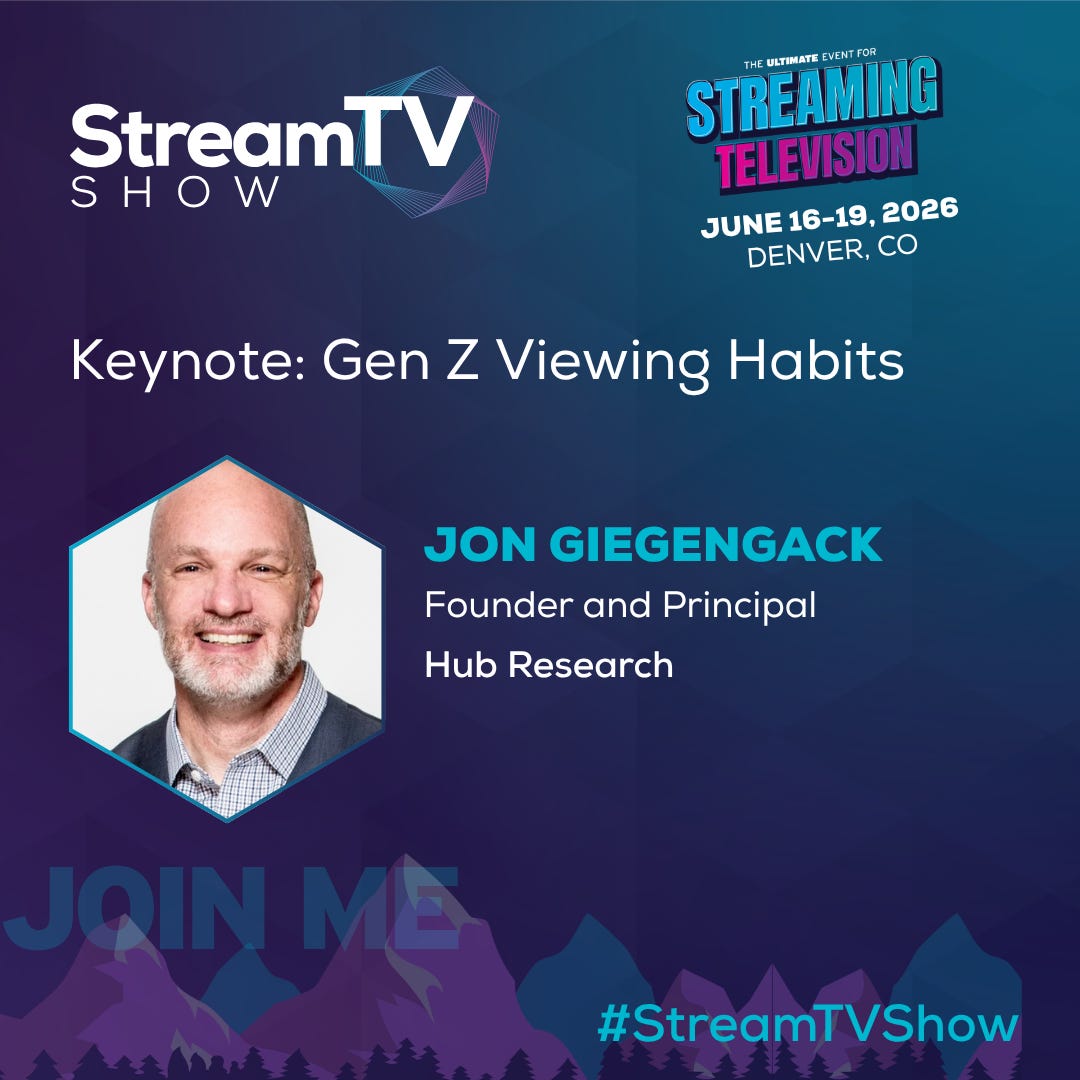
Thursday, June 18 — 4:10pm - 4:30pm
Hub’s Jon Giegengack will be presenting new findings on Gen Z viewing habits and content creator insights.
Want More Hub Intel?
Hub Intel is a reader-supported publication. Become a paid subscriber to get access to exclusive Hub research on key topics as well as admission to Hub’s webinars.
Hub Entertainment Research tracks how technology is changing the way people find, choose, and consume entertainment content: from TV and movies, to gaming, music, podcasts and social video. Working with the largest networks, pay TV operators, streaming providers, and studios, Hub’s studies have covered the most important trends in providers, devices, and technologies since 2013.
Learn More: Visit our website
Follow Us: LinkedIn
Get In Touch: Email us at hubintel@substack.com